
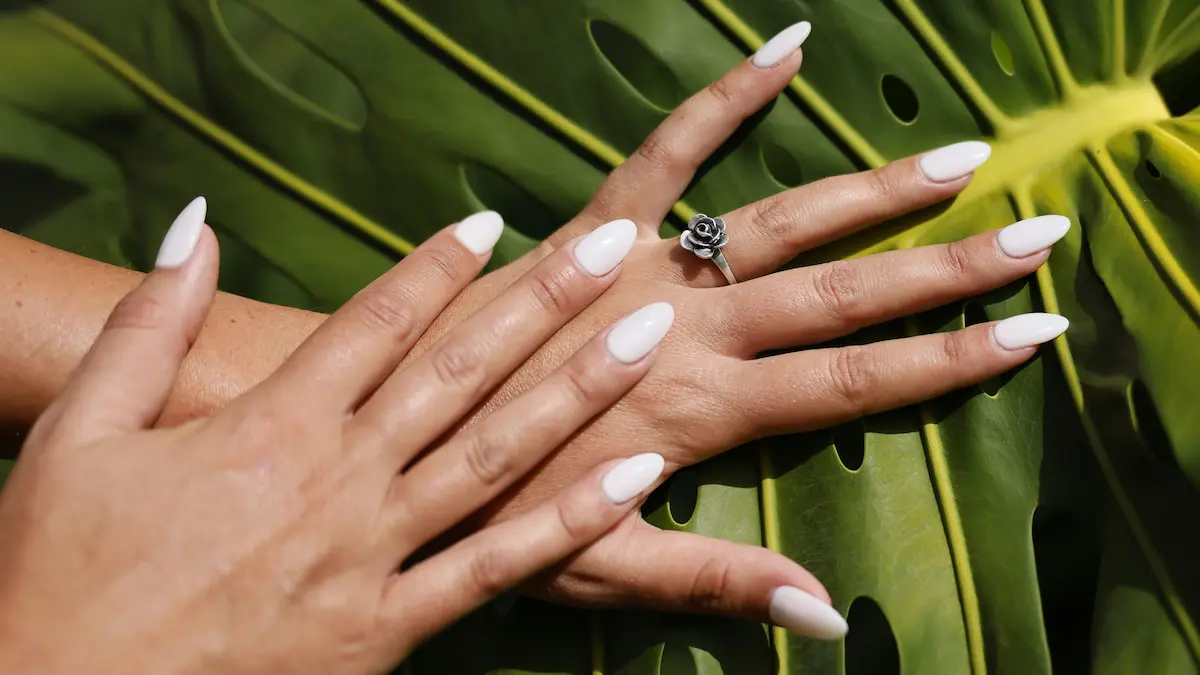
Do you ever do a double-take when you see someone’s incredible nails and immediately need to know everything? The perfect almond shape, the glossy finish, the kind of length that looks effortless but definitely isn’t natural. Chances are, those are acrylics. Whether you’re after extra length, a stronger foundation for nail art, or simply want nails that are reliably robust, acrylic nails are one of the most popular enhancements out there. This guide covers everything, including what they are, how they’re applied, the right aftercare, trending designs and how acrylics compare to other nail treatments.
What are acrylic nails?
Acrylic nails are enhancements made by mixing a liquid monomer with a powder polymer to create a malleable paste which hardens to a strong layer when applied over your natural nails or extensions. They air-cure without a UV lamp (one less thing to think about), and this sets them apart from gel formulas.
Acrylics are popular for good reason. The chemical reaction creates a durable, resilient surface that resists cracks and chips. This makes them a great choice for nail biters, weak nails, and anyone wanting dramatic length or intricate designs. Your nail tech can use full tips for extra length, sculpt with forms for custom shapes, or apply overlays purely for strength. Plus, modern formulas have come a long way, with lower odour and improved consistency.
Why choose acrylic nails?
Acrylics are the workhorse of nail enhancements. They provide serious durability for weeks of typing, texting and daily life (yes, even the intensive group chat scrolling). The ability to create dramatic shapes means you’re not limited to what your natural nails can manage on their own. They’re widely available and often more affordable compared to other enhancements, which is why you’ll find acrylic services in nearly every nail salon.
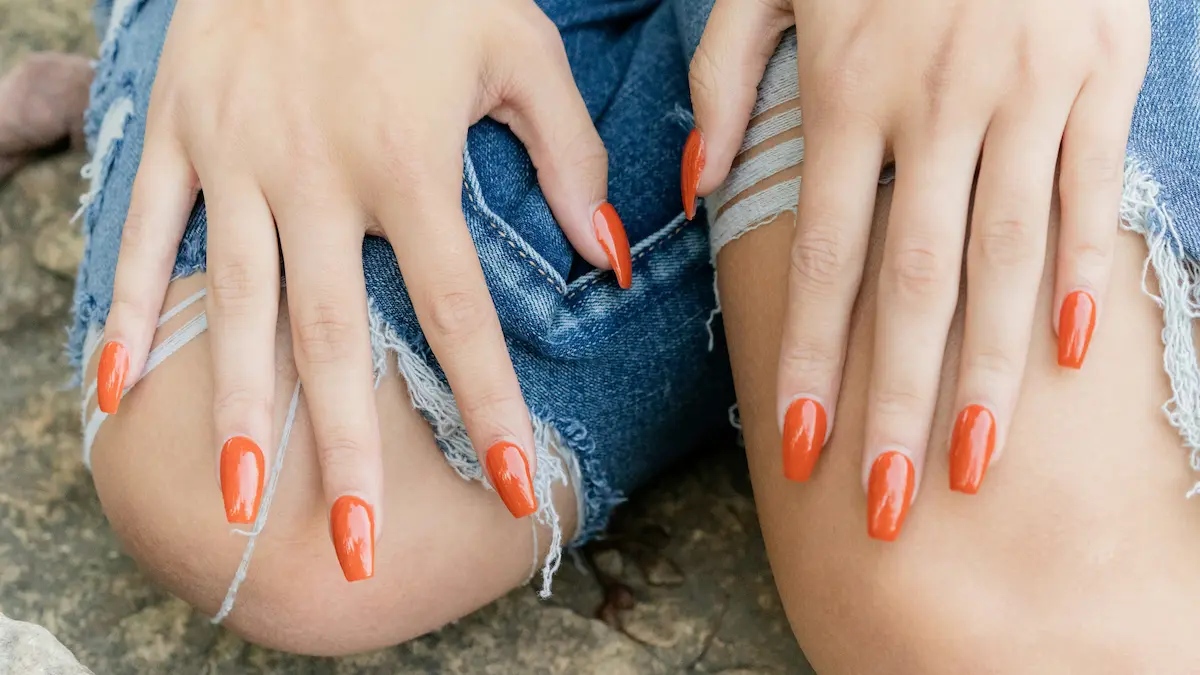
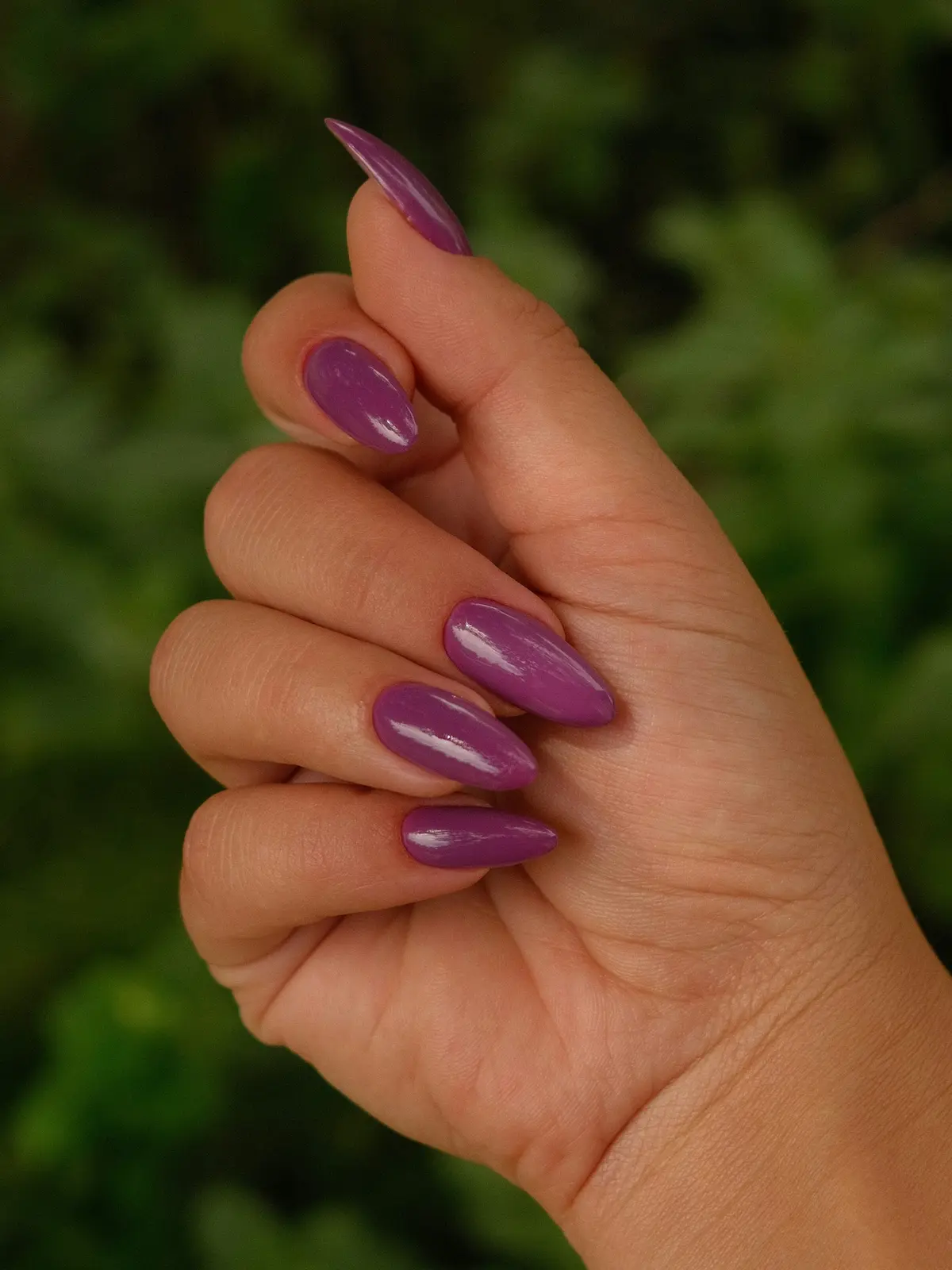
They can be filed into virtually any shape, like almond, coffin, square and stiletto. If you’ve got weak nails, you’re a reformed nail biter, or you want a strong foundation for bold designs and embellishments, acrylics are your best bet.

What goes into a professional acrylic set?
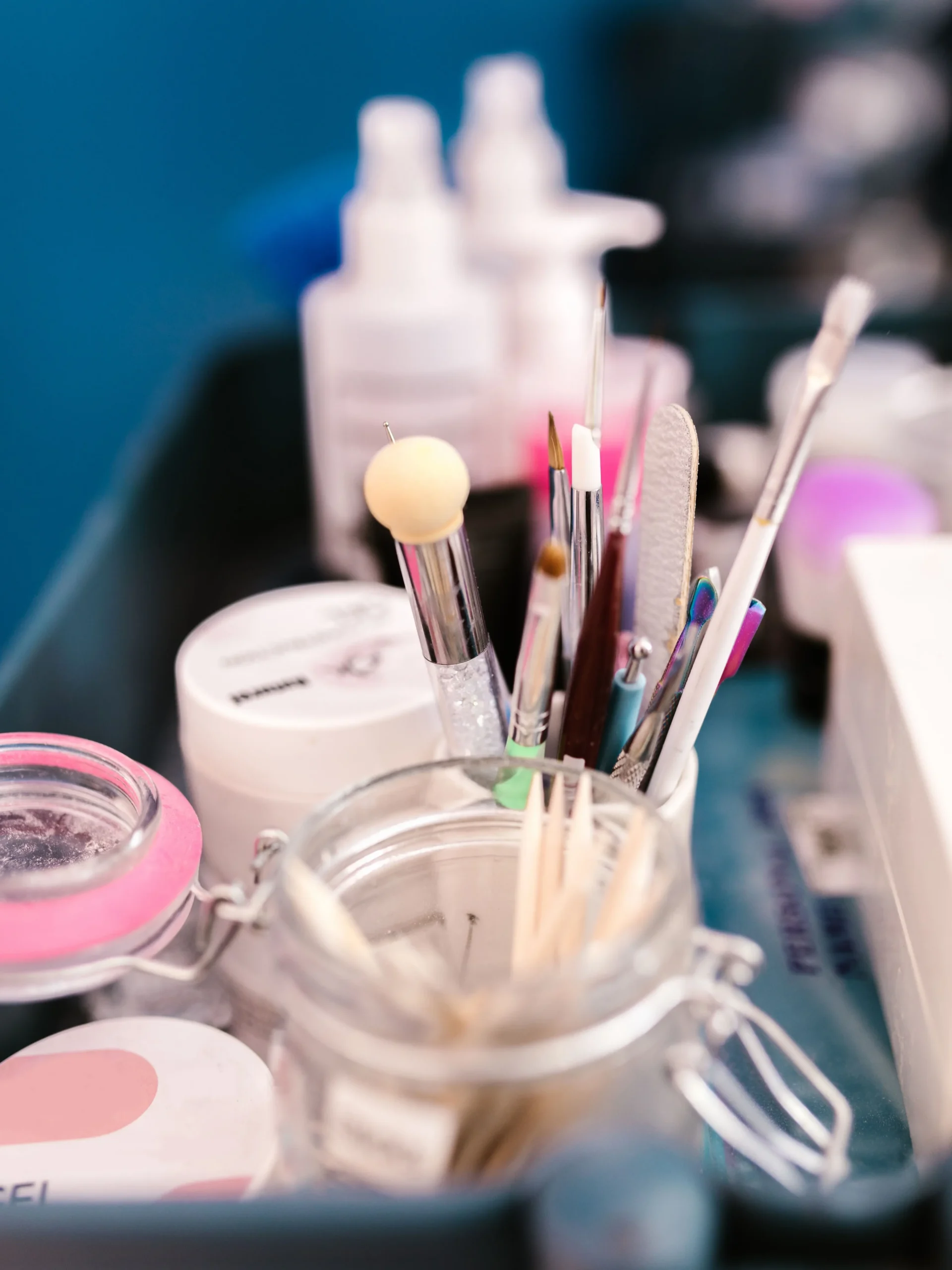
Ever wondered what all those pots and brushes on the nail table are for? Here’s a quick look at what a professional works with to create acrylic nails, and why quality matters.
Professional sets include an array of products and tools (a wonderland for nail techs). They’ll have acrylic powders (clear, pink, white and colours), a compatible liquid monomer, specialist brushes, dehydrator, primer, nail tips or forms, files, buffers and a sealing top coat. The key ingredient to look out for? MMA-free monomers. Reputable salons always use ethyl methacrylate (EMA) formulas, which are safer for your natural nails and far less likely to cause allergic reactions.
The quality of the products your salon uses really impacts how long your set lasts, how it looks, and how healthy your nails stay underneath. Cheaper products can cause lifting, uneven results and need more frequent repairs. A good salon invests in professional-grade supplies, and you’ll notice the difference from the first appointment.
What happens during your acrylic nail appointment?
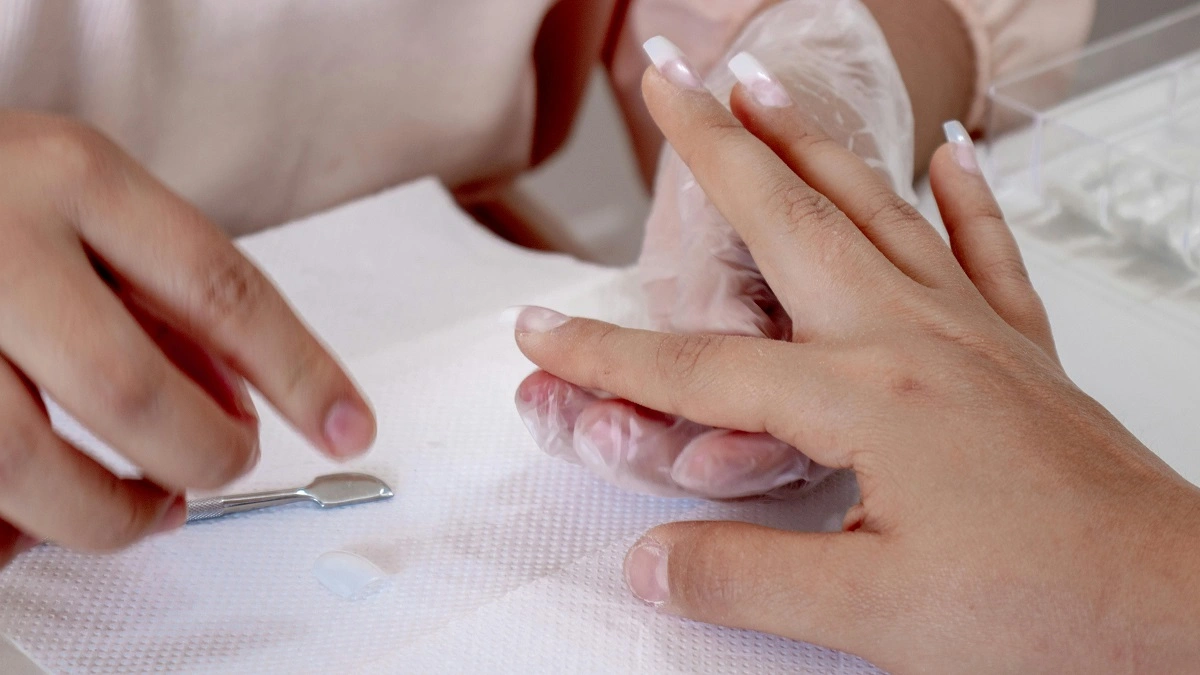
An acrylic nail appointment starts with a nail tech pushing back your cuticles and lightly buffing the nail surface to remove oils and create a good base for adhesion. A dehydrator and primer go on first (skip this step and you’ll have lifting within days, which is why the prep matters so much). If you’re having extensions, then your tech will apply them next. Then the liquid monomer is mixed with the powder to create small beads of acrylic which are placed on the nail plate and smoothed across the nail.
A skilled professional will build a strong apex (the highest point of the nail) to prevent cracking. Think of it like an arched bridge: the curve distributes pressure and stops breaks. This is one of the things that separates a decent set from a brilliant one, and it’s exactly why professional application is worth it.
Once the acrylic is set, everything gets filed and buffed into your chosen shape and a top coat seals it all for shine and protection. The whole process typically takes around an hour for a full set, and you walk out with nails that look incredible and feel strong.
Acrylic nail fills
Fills every two to three weeks keep your acrylics looking fresh and prevent lifting. During a fill, any lifted product is removed, the cuticle area is prepped, and fresh acrylic is added to rebalance the shape and structure. Keeping up with your fills also minimises gaps where moisture can get trapped (which reduces the risk of fungal issues, so don’t skip them).
The process involves filing down the old acrylic, cleaning and priming the regrowth area, then blending new product in for a seamless finish. Your lifestyle and the speed of your nail growth both affect how often you’ll need a fill. If you’re someone with hands in water frequently (nurses, cleaners, keen dishwashers), you might need fills closer to the two-week mark. For everyone else, three weeks is usually the sweet spot.
How to care for your acrylic nails
The good news is that looking after acrylics is straightforward. Moisturise daily and wear gloves during chores. And if the weather turns cold, your cuticles will thank you for a little extra oil. Just remember to avoid using your nails as tools (they’re not bottle openers or parcel tape removers, no matter how invincible they feel).
For regular upkeep:
- Wash hands gently and pat dry thoroughly
- Apply cuticle oil daily (a little goes a long way)
- Refresh your top coat weekly for extra shine
- Wear gloves when washing up or using cleaning products
- Buff minor chips and reseal with a top coat
If you notice lifting, resist the urge to pick at it. Instead, pop back to the salon for a quick patch. And if you spot any discolouration or “greenies”, that signals bacterial growth and needs professional attention straight away.
How to remove acrylic nails safely
Whatever you do, don’t peel acrylics off. We know it’s tempting, but pulling them off takes layers of your natural nail with them and the damage can take months to grow out. It’s just not worth it.
You can remove acrylics at home, with acetone and patience. But getting the soaking time right, avoiding over-filing, and not damaging the nail bed in the process is trickier than it sounds. Most DIY removal attempts end with thinner, weaker nails and a lot of regret. A professional has the tools and technique to remove your set quickly, comfortably and without any lasting damage.
After removal, your nails may feel a little thin and bendy. Use a strengthening treatment, moisturise daily, and keep nails short whilst they recover. Give them at least a couple of weeks of rest before your next set.

Trending acrylic nail designs
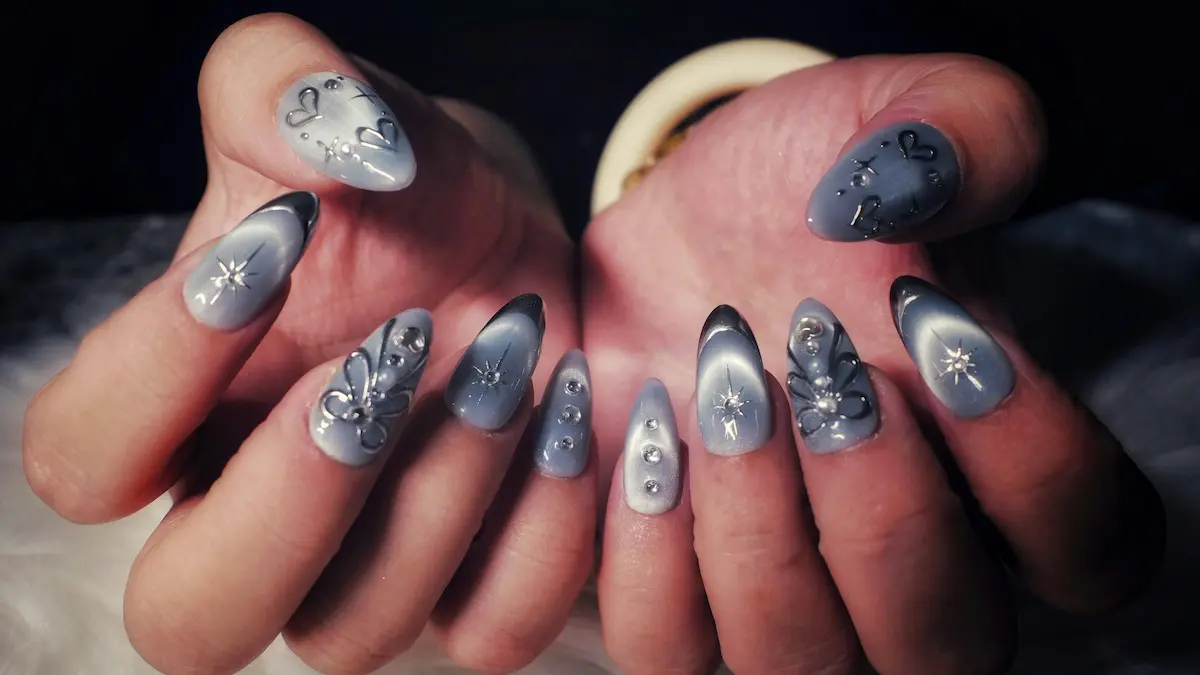
Nail art is where acrylics really shine. They’re strong enough to hold intricate designs and embellishments that would chip off gel in days, which is why you’ll see the most elaborate nail designs on acrylic sets.
Classic designs remain as popular as ever: French tips (including coloured and glitter variations), solid neutrals, single accent nails and soft ombre gradients. On the trendier side, chrome and metallic finishes are having a serious moment, along with aura nails, glazed donut looks, abstract shapes, negative space and gemstone embellishments. Whether you’re a minimalist or a maximalist, there’s an acrylic design with your name on it.
How to spot a quality acrylic salon
Not all acrylic sets are created equal, and the salon you choose matters more than you might think. A few things to look for: the salon should use professional-grade, MMA-free products (ask if you’re unsure, any reputable place will be happy to tell you). Look for clean, well-organised workstations and proper hygiene practices. Your nail tech should ask about your lifestyle, your nail history and what you’re after before they start.
Always book with licensed, reviewed salons. Read reviews, check photos of previous work, and trust your instincts. If something feels off, it probably is. Your nails deserve better than a bargain set that lifts after four days.

Acrylic nails vs other enhancements
Acrylics cure by chemical air-dry, gels cure under a UV or LED lamp, and dip powder uses glue with layered powder. Acrylics are more rigid and the strongest option for dramatic lengths. If you want stiletto nails or extreme coffin shapes, acrylics are the one.
Gels offer more flexibility and tend to look a little more natural, but they may need more frequent fills (or full set changes) and aren’t as strong for extreme lengths. The removal process differs too: acrylics typically need a longer acetone soak (around 45 minutes), whilst gels come off in about 15 to 20 minutes. Each has its strengths, and the right choice depends on your lifestyle and what you’re after.
Now you’ve got the full picture on acrylic nails, from what happens during your appointment to how to care for them and which designs are trending right now. Whether you’re booking your first ever set or switching up your usual style, a skilled professional will have you walking out with nails that look stunning and last. Browse salons near you on Treatwell, read reviews, compare prices and book your next appointment for whenever suits.
FAQs
Every two to three weeks as your nails grow. Wait longer and you’ll see a noticeable gap that looks untidy, risks lifting or could let moisture creep in.
Soak them off with acetone, never peel. File the shine off first, wrap in acetone-soaked cotton and foil, then gently push off after 30 minutes.
Not if applied and removed properly. Damage comes from rough prep, forced removal, or dodgy products containing MMA.
A basic set typically ranges from €45 to €65, with intricate designs pushing the price higher. Fills cost less (around €35 to €50).
Absolutely, but limit prolonged hot water soaking and always dry your nails thoroughly. Wearing gloves for washing up is a good tip to prevent lifting.
Strong fumes during application, potential allergic reactions from low-quality monomer, and the risk of damage if removed improperly. All of these negatives can be avoided by booking with a professional nail tech at a reputable salon.