
There’s a particular kind of tension that lives in your head, neck and shoulders. You know the one. It creeps in after a long week hunched over a laptop. There’s the low hum of a tension headache. And there are the shoulders that seem to have inched up near your ears. If that sounds familiar, an Indian head massage might be exactly the reset you didn’t know you needed.
It’s one of the most soothing treatments around, and one of the most accessible too. It’s done seated and fully clothed, with no need to strip off. But if you’ve never had one, you probably have questions. What actually happens? Is it good for you? Are there any downsides? We’re going to talk you through all of it, from the history and the benefits to what to expect.
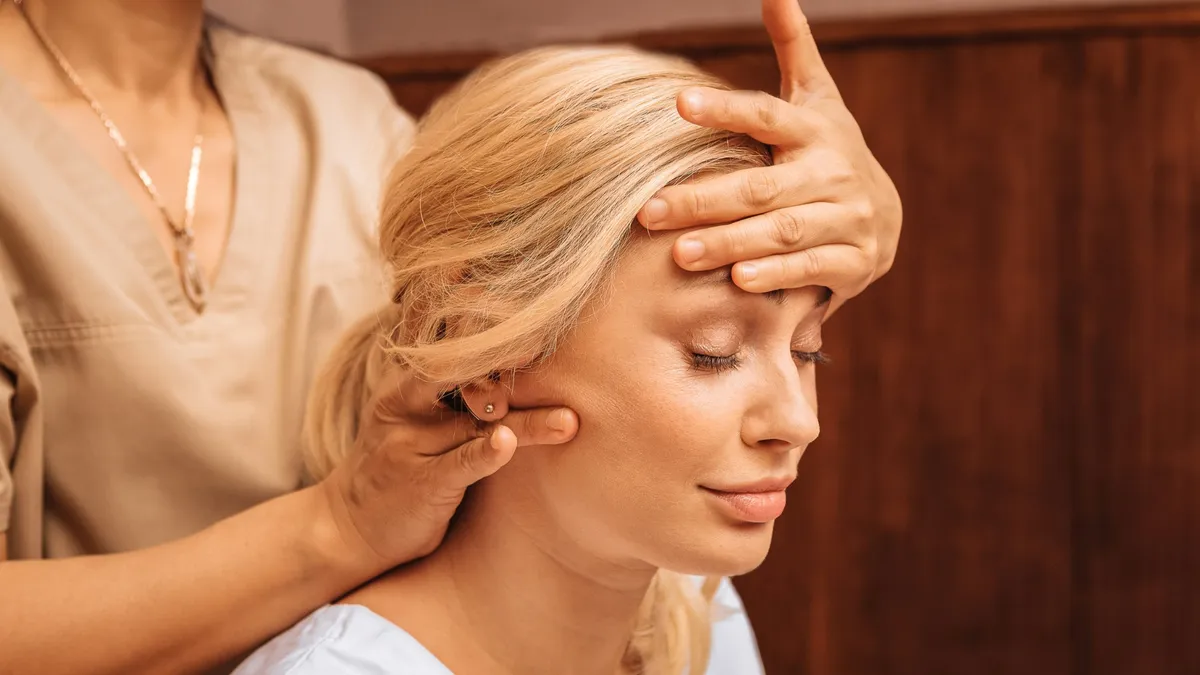
What is an Indian head massage?
An Indian head massage focuses on the scalp, face, neck, shoulders and upper back. It uses a range of gentle-to-firm techniques to release tension and encourage deep relaxation. The practice has roots in India going back thousands of years, and you might also hear it called by its traditional name, champissage (the Hindi word for head massage, which also gave us the word “shampoo”).
It began as a family and grooming ritual, passed down through generations. Today it’s a popular therapeutic treatment offered in spas and salons worldwide. Unlike a full-body massage, it zeroes in on the areas where most of us carry our stress (hello, shoulders). That focus is a big part of why it’s so wonderfully effective.
The history behind Indian head massage
Indian head massage isn’t a modern spa invention. Its origins go back centuries. The practice grew out of Ayurveda, the ancient Indian approach to health and wellbeing, and was simply a part of everyday family life.
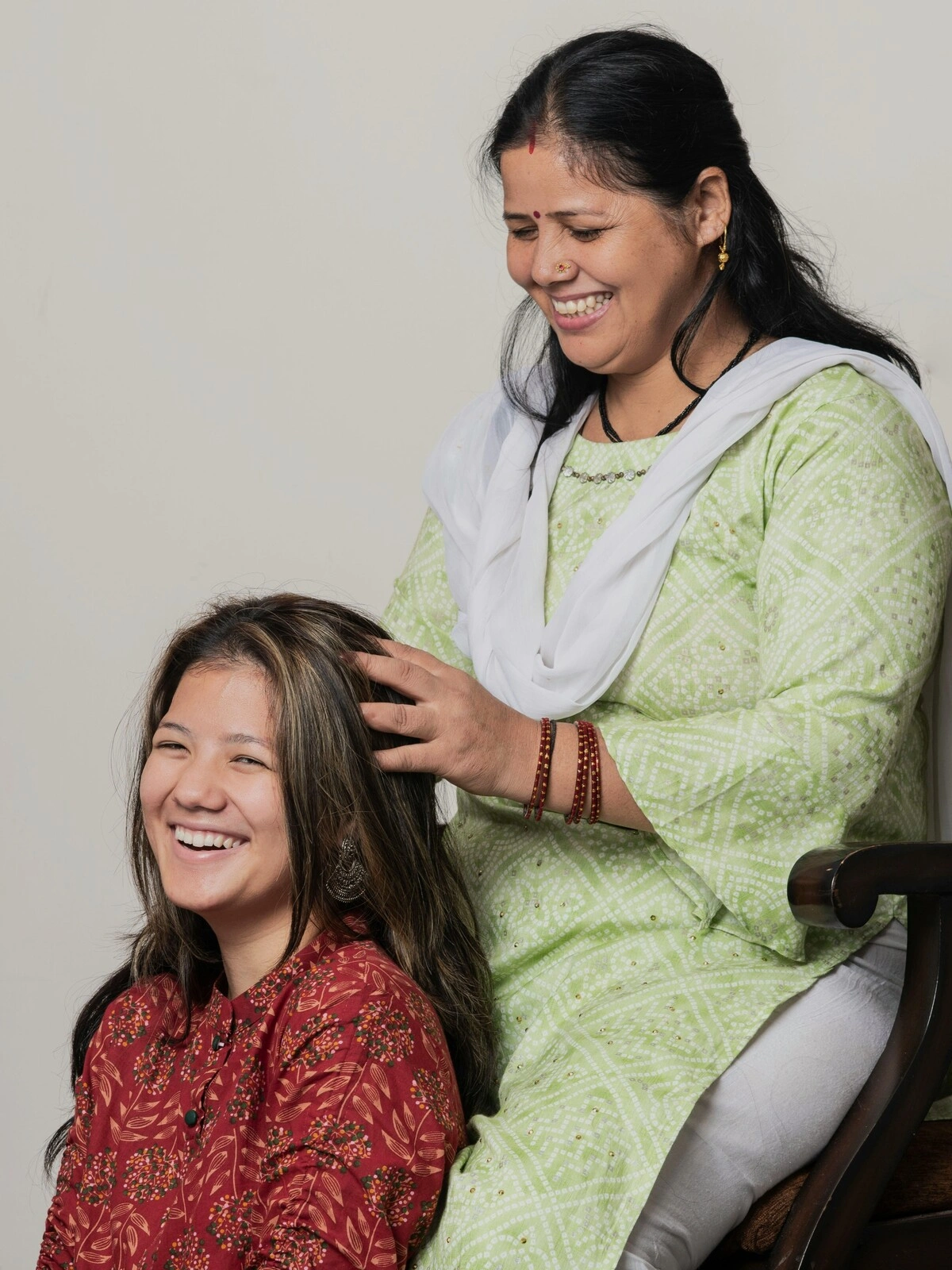
For generations, it was passed down as a grooming and bonding ritual. Mothers would massage oils into their children’s hair and scalps to keep them healthy and strong, and the tradition carried on between family members throughout life. In the twentieth century it spread to the wider world and became the structured, seated treatment we know today. Knowing that little bit of history adds something to the experience. It connects a modern moment of calm to a centuries-old tradition of care.
What happens during a treatment
You stay seated and fully clothed throughout while your therapist works through a sequence of movements across your shoulders, upper back, neck, scalp and often your face. It’s refreshingly fuss-free. No undressing, and no awkward lying face-down through a hole (a relief for anyone who finds that part a bit much).
The techniques vary as they go. Firm kneading releases knots in the shoulders, gentler circular motions soothe the face, while rubbing, tapping, and crawling fingertips stimulate the scalp. A treatment usually lasts 25 to 45 minutes, and many people drift into a deeply relaxed, almost sleepy state (drooling is optional but not unheard of). Your therapist checks the pressure suits you throughout, so don’t be shy about asking for more or less.
The role of oils
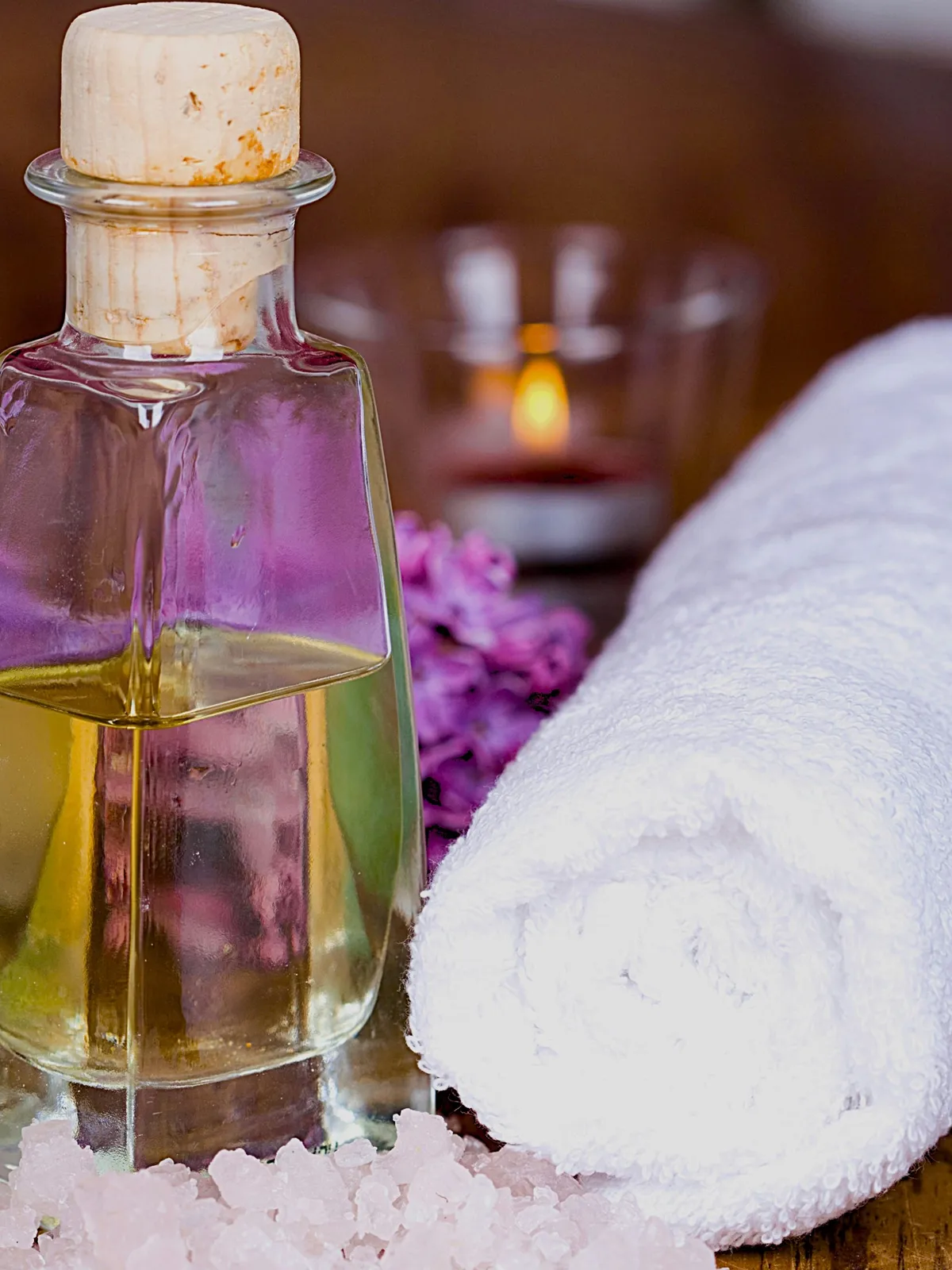
Traditionally, an Indian head massage uses oils. They nourish the scalp and hair, and let the hands glide smoothly. Your therapist might reach for coconut, almond or sesame oil, sometimes chosen to suit your hair or your preferences.
That said, plenty of modern, chair-based versions skip the oil entirely. That makes them perfect for a quick lunchtime treatment when you don’t fancy heading back to work with slick-looking hair. Just let your therapist know which you prefer when you book.

The benefits of an Indian head massage
The main benefit is deep relaxation. It also eases tension in the head, neck and shoulders, and it’s widely linked to fewer tension headaches, better sleep and a healthier-feeling scalp. People come back to it again and again simply because it feels good. One thing worth saying upfront: while these benefits are widely reported, everyone responds differently, and a massage isn’t a substitute for medical treatment.
Stress relief and relaxation
This is the headline act. Indian head massage is deeply relaxing. People use it to unwind, ease stress and quieten a busy mind. Focusing on the head, neck and shoulders, where tension so often gathers, can leave you feeling lighter, calmer and mentally clear. Lots of people report sleeping better after a treatment, thanks to that deep sense of relaxation.
Headaches, neck and shoulder tension
It releases muscular tightness in the neck, shoulders and scalp. That’s why many people find it helps ease tension headaches, eye strain and the general achiness of desk work and poor posture. If you spend your days at a screen, this one seems tailor-made for you.
Hair and scalp health
The head work is also often linked to healthier-feeling hair and scalp. Far from disrupting hairs, the friction and pressure can improve circulation to stimulate hair follicles for better growth while spreading natural oils to condition the scalp.
Circulation and a sense of energy
The techniques used on the scalp, neck and shoulders are often said to boost blood flow to the area. Many people describe feeling re-energised and refreshed afterwards, as though a fog has lifted. These effects are widely reported rather than guaranteed, and everyone’s experience differs. Still, that revived, clear-headed feeling is one people often mention as a highlight.

Indian head massage versus an ordinary head massage
The short version: a general head massage focuses on the scalp alone. An Indian head massage is a fuller, structured treatment working across the shoulders, upper back, arms, neck, scalp and face.
You might be wondering how it differs from someone simply rubbing your head, and that’s a fair question (the lovely scalp rub at the hairdressers is the everyday version most of us know). The difference is that an Indian head massage follows traditional techniques designed to release tension and rebalance the whole upper body, not just soothe the scalp. It’s rooted in a centuries-old practice and delivered by a trained therapist. So it’s a more thorough, therapeutic experience than a casual head rub, however nice those are too.

Disadvantages and risks
Indian head massage is generally very safe and gentle. But no treatment is perfect for everyone, so it’s worth knowing the potential downsides. A few people notice mild, temporary side-effects: light-headedness, a minor headache, tiredness, or slight tenderness in the muscles worked on. These usually pass quickly, and are often just your body relaxing and rehydrating.
As the treatment involves pressure on the head, neck and shoulders, it isn’t suitable for everyone, particularly if you have certain health conditions. This is where a professional’s judgement matters. A trained therapist will ask about your health before starting, and adapt or postpone the treatment if needed. If you ever feel unwell during or after a massage, tell your therapist, and speak to your GP if you’re concerned.

Who should take extra care
There are some situations where you should check with your therapist or GP before booking. Take extra care and seek advice if you have a recent head, neck or spinal injury. The same goes for a scalp infection or skin condition, uncontrolled high or low blood pressure, a blood clotting disorder, or if you’re pregnant. And check first if you have a diagnosed medical condition, or you’re being treated for a serious illness.
None of this is meant to alarm you. Most people are perfectly suited to an Indian head massage. It simply means being upfront about your health when you book. That way your therapist can keep you safe and tailor the treatment to you (and refer you on if a medical opinion is the wiser first step).
Indian head massage and your hair
One of the treatment’s traditional draws is a healthier-feeling scalp and softer, more conditioned hair. That makes sense, given its origins in oiling and grooming rituals. The scalp massage is thought to stimulate the area and support the natural condition of your hair and scalp, while oils like coconut, almond or sesame add moisture and shine.
For some people, this is the main reason they seek it out. So, if hair and scalp benefits are your main draw, mention it when you book. Your therapist can then lean into the oil-based, scalp-focused approach.
How to prepare
A little preparation helps you get the most from your treatment. There’s not much to it, but these small things make a difference:
- Stay hydrated before and after, so you feel your best.
- Avoid a heavy meal right beforehand. You’ll be more comfortable and relaxed without a full stomach.
- Think about your hair. If oils are involved, arrive with clean, dry hair and plan to wash it later. Or choose an oil-free treatment if you’ve got places to be.
- Flag any health conditions or areas of concern when you book, so your therapist can adapt.
- Arrive a few minutes early. Give yourself time to settle and take a breath, rather than rushing in flustered.

Aftercare: what to do afterwards
Looking after yourself afterwards helps the benefits last. Take it gently for the rest of the day. Keep things calm where you can:
- Drink plenty of water, as it’s common to feel a little thirsty after a massage.
- Leave any oils in for a while to nourish your scalp and hair before washing them out. Some people leave them overnight for an extra conditioning treat.
- Go easy on alcohol and heavy meals for a few hours if you can.
- Skip strenuous exercise for the rest of the day, so your body stays relaxed rather than snapping back into go-mode.
- Rest. If you felt any light-headedness, sit quietly for a moment before heading off.
An early night rounds the whole thing off nicely. You’ll often wake up feeling the benefit even more the next morning.
How often to book
There’s no strict rule. It really depends on why you’re having it. If you’re managing ongoing stress or regular tension, a treatment every couple of weeks or once a month can keep you on top of things. If it’s more of an occasional treat, whenever you feel you need it is perfectly fine.
Your therapist can suggest a rhythm based on how you respond. Like most good things, the benefits tend to build with regularity. A consistent routine often serves people better than the occasional one-off.

What an Indian head massage costs
The price could be anywhere from €30 to €70 depending on where you are, the salon or spa, and how long the treatment lasts. A shorter, oil-free express version usually costs less than a longer treatment with oils in a luxury spa. Prices also tend to be higher in big cities than in smaller towns.
Try not to simply chase the lowest price. It’s worth finding a qualified, experienced therapist and a setting where you feel comfortable. The skill of the therapist makes an enormous difference to how good the treatment feels. Comparing a few options near you is the easiest way to balance quality, atmosphere and price.
At home versus booking a professional
Can you do a version of this at home? Sort of. But it’s hard to switch off when you’re the one doing the work. You’ll find plenty of tutorials for a home version, and a gentle self-scalp-rub can feel lovely of an evening. So we won’t pretend it’s impossible.
But, a word of warning, without training it’s easy to use the wrong pressure or miss the techniques that make the treatment work, never mind the areas you simply can’t reach on yourself. The whole point is to switch off completely while someone skilled takes care of you. A home attempt just can’t replicate that. For a treatment this restorative, letting a professional do their thing is pretty much essential.
Ready to unwind?
So there you have it: everything you need to know before you sink into the chair. If your head feels full and your shoulders are up around your ears, an Indian head massage is one of the loveliest, lowest-effort ways to hit reset. No undressing, no faff, just 30-odd minutes of targeted calm that leaves you feeling lighter and a little more human. The magic is in the hands of a skilled therapist, so the best thing you can do is find one near you and book in. Browse salons on Treatwell, read the reviews, compare prices, and book for whenever you feel the need (there’s never a bad time).
FAQs
What happens in an Indian head massage?
You stay seated and fully clothed while your therapist massages your shoulders, upper back, arms, neck, scalp and often your face, using a mix of kneading and gentler pressure-point techniques. It usually lasts 25 to 45 minutes and can be done with or without oils, depending on your preference.
Are Indian head massages good for you?
Many people find them deeply relaxing and helpful for easing stress, tension headaches and tight shoulders, and they’re widely enjoyed for inviting a sense of calm and wellbeing. That said, responses vary from person to person.
What are the disadvantages of Indian head massage?
Some people experience mild, temporary effects afterwards, such as light-headedness, a slight headache, tiredness or muscle tenderness, which usually pass quickly. It’s also not suitable for everyone, so anyone with certain health conditions, recent injuries or who is pregnant should check with their therapist or GP before booking.
What’s the difference between an Indian head massage and a head massage?
A general head massage usually focuses just on the scalp, while an Indian head massage is a fuller, structured treatment covering the shoulders, upper back, arms, neck, scalp and face. It follows traditional techniques designed to release tension across the whole upper body, making it more thorough and therapeutic than a simple scalp rub.
How often should you get an Indian head massage?
For ongoing stress or tension, many people enjoy one every couple of weeks or monthly, while others book in whenever they feel they need it. Your therapist can recommend a schedule based on your needs, as the benefits tend to build with regular treatments.