
Identifying your exact hair type involves a simple “wash and air-dry” test to reveal your true pattern, combined with a quick check of your strand diameter and porosity level.
We’ve all stood in the haircare aisle, overwhelmed by products promising miracles for “curly”, “wavy”, or “coily” hair. Understanding your hair type helps you choose the right care, but it’s just one part of a truly personalised routine. This guide breaks down hair classification systems, porosity, strand thickness, and tips for accommodating multiple or changing hair types.
Understanding the hair typing system: the complete classification explained
You know that moment when someone asks your hair type and you genuinely don’t know what to say? The Andre Walker Hair Typing System answers that question for you, and it’s easier than it sounds.
The system uses numbers 1-4 (curl pattern: straight to coily) plus letters A-C (thickness or wave definition: fine to coarse). So you might be a 2B, or a 3C, or somewhere in between – think of it as your hair’s postcode.
Here’s the catch: your hair type isn’t the whole story. Porosity, scalp health, even your hormones all affect how your hair actually behaves day-to-day.
Hair has three main layers: the cuticle (protective outer), cortex (colour and strength), and medulla (sometimes missing in fine hair). Follicle shape influences curls: round follicles make straight hair; oval or elliptical shapes make waves or curls. This explains why hair ranges from pin-straight to tight spirals. Think of it like pasta shapes: the follicle is the die that determines whether you’re getting spaghetti or fusilli.
The number system: curl pattern categories (1-4)
Numbers span from Type 1 (straight) to Type 4 (coily or kinky). Curliness is mostly determined by genetics and follicle shape, but can change due to damage or hormones. Most people discover their type sits somewhere between two categories: perhaps you’re convinced you’re a 2C but your hairdresser insists you’re edging into 3A territory at the back.
The letter system: texture and definition (A, B, C)
A subtypes have the loosest pattern and finest strands; C subtypes have the tightest or thickest. Use the number-letter combo (e.g., 2B) to select the most effective products and methods for your hair. The number-letter combo (like 2B or 3C) helps you narrow down which products and methods will actually work for your hair.
Quick history lesson: Andre Walker originally designed A-C to mean strand thickness (fine to coarse), not curl tightness. But the natural hair community adapted it over time to cover both texture and curl definition – which is honestly more useful anyway.

How to find your hair type: step-by-step method
Start with clean, product-free hair. Wash with clarifying shampoo, air dry naturally, then assess your curl pattern, strand thickness, and hair density. Doing this on a moderate humidity day increases accuracy.
The wash and air dry test
Cleanse with sulfate-free shampoo, blot with a microfibre towel, then air dry fully without touching or brushing. Resist the urge to fiddle, this reveals your hair’s true texture. The first hour of drying is hardest because hair looks wild before settling into its natural pattern.
The thread test for strand thickness
Compare a single strand to sewing thread: thinner means fine, similar means medium, thicker means coarse. Test strands from several head sections, as texture can vary. Your hairline might be significantly finer than your crown, which explains why certain styles never quite work.
Type 1 hair: straight hair characteristics and subtypes
Type 1 hair sits flat with no natural curl and reflects light easily. It may get oily faster than other types because sebum travels down the shaft without curls to slow it. The main challenges include lack of volume and trouble holding styles or curls – if you’ve spent an hour with heated rollers only to watch your hair go poker-straight within twenty minutes, you understand the frustration. Use lightweight products and avoid shampooing too frequently, which can trigger more oil production.
Type 1A vs 1B vs 1C: key differences
Type 1A is very fine and limp – the kind that refuses to hold any style. Type 1B has slightly more body and actually responds to volumising products. Type 1C is coarse with some bends, so you get more natural texture but it’s stubborn about cooperating with styling tools.
Type 2 hair: wavy hair characteristics and subtypes
Type 2 makes lovely loose S-shaped waves. It’s versatile for styling but may frizz or lose volume when overloaded with heavy products. Apply conditioner to the ends to avoid flat roots – a mistake practically every wavy-haired person makes at least once. Try blow-drying with a diffuser to enhance your natural wave without creating frizz.
Type 2A vs 2B vs 2C: identifying your wave pattern
Type 2A features loose, subtle waves with fine texture that can easily be straightened or curled. Type 2B shows a slightly more pronounced S-shape with thicker texture, starting around ear level. Type 2C has strong S-waves from the roots and is prone to frizz, occasionally forming actual spirals, it’s the rebellious teenager of the wavy family.
Type 3 hair: curly hair characteristics and subtypes
Type 3 has defined curls and spirals that are prone to dryness and shrinkage. Don’t panic if your ringlets look shorter than expected when dry, that’s what curls do. Use moisture-rich conditioners, finger-coiling, and diffusers for best definition. The real challenge with Type 3 hair isn’t the curls themselves but managing the fact that one side always seems to curl perfectly whilst the other does its own chaotic thing.
Type 3A vs 3B vs 3C: understanding curl diameter
Type 3A features large loose curls about the width of sidewalk chalk, with 10–20% shrinkage. Type 3B shows tighter ringlets roughly Sharpie-sized, experiencing about 30% shrinkage. Type 3C has tight corkscrews the width of a pencil with 40–50% shrinkage, the kind of curls that make people constantly ask if you’ve had a perm (you haven’t).
Type 4 hair: coily and kinky hair characteristics and subtypes
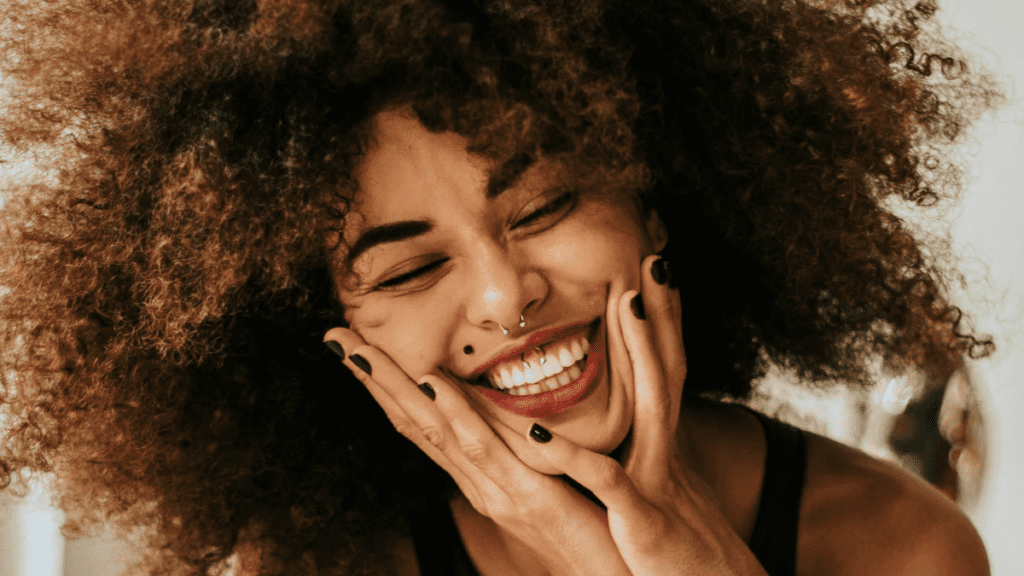
Type 4 has the tightest coils – and demands respect. It’s fragile, shrinks significantly, and needs consistent moisture to thrive. Techniques like the LOC/LCO method help (that’s Liquid, Oil, Cream, or Cream then Oil, depending on your preference). Protective styles aren’t just aesthetic; they minimise breakage and give your hair a break from constant manipulation.
Type 4A vs 4B vs 4C: coil pattern breakdown
Type 4A has S-shaped coils about the size of a crochet needle with visible curl definition. Type 4B features Z-shaped patterns with sharp angles and less defined curls. Type 4C has the tightest coils, nearly patternless with maximum shrinkage, the ultimate shape-shifter that can appear drastically different lengths depending on how it’s styled.
Best products and ingredients for Type 4 hair
Heavy butters and oils like shea butter and castor oil are non-negotiable for Type 4 hair. The LOC or LCO layering method helps lock in moisture throughout the day. Regular deep conditioning and protein treatments keep strands strong enough to handle styling without snapping.
Hair strand thickness: fine, medium, and coarse explained
Strand thickness refers to the width of individual hairs. Fine strands are thinner than thread and delicate, breaking easily with rough handling. Coarse strands are wider and stronger but drier because they have more cuticle layers. Medium strands fall comfortably in between. Thickness affects how much product your hair can absorb and how well it holds weight. Fine hair gets weighed down by heavy oils, whilst coarse hair drinks them up without looking greasy.
How strand thickness affects product choice
Fine hair needs lightweight products that won’t flatten it. Medium hair tolerates most products without complaint. Coarse hair benefits from heavy oils and butters that can penetrate those extra cuticle layers.
Hair porosity: the hidden factor in hair type
Porosity means how well hair absorbs and retains moisture. Low porosity hair has tightly closed cuticles that resist moisture, often leaving products sitting on top. High porosity has open and lifted cuticles, absorbing moisture quickly but losing it just as fast. Porosity can shift with damage, chemical treatments, or hormones, which is why your hair might suddenly behave differently after years of predictability.
The float test: how to check your porosity at home
Place a clean strand in room-temperature water. Floats? Low porosity. Sinks gradually? Normal. Drops like a stone? High porosity. Take this test with a grain of salt – it’s not scientifically foolproof, but it beats guessing wildly in the Boots aisle.
Caring for each porosity level
Low porosity hair needs light formulas and warm water to help products penetrate those stubborn cuticles. High porosity hair requires protein treatments and sealing oils to patch up the gaps and lock moisture in. Normal porosity just needs a balanced routine to maintain healthy cuticle structure.
Can you have multiple hair types? Understanding combination patterns
Many people have multiple types, with looser waves at the crown and tighter curls at the nape or sides. Some discover their hairline is pin-straight whilst the back forms perfect ringlets. Treat each section according to its unique needs for best results. Yes, this means you might need different products for different areas of your head.
Mapping your hair: a section-by-section approach
Divide your head into zones: crown, sides, nape, and hairline. Observe curl pattern, thickness, and behaviour in each area. Adjust your regimen per section: perhaps gel on the curly bits and volumising mousse on the straighter sections.
Beyond hair type: other factors that affect your hair care routine
Hair density (how many hairs per square inch) and scalp health matter as much as type or thickness. Environmental factors like hard water, humidity, and pollution affect how your hair behaves. Hormones and age also play starring roles: pregnancy, menopause, and even stress can completely transform your hair seemingly overnight.
Hair density vs hair thickness: know the difference
Density measures how many hairs you have per area of scalp. Thickness measures the diameter of each individual strand. You can have fine but dense hair (lots of thin strands) or coarse but sparse hair (fewer thick strands). This is why two people with the same curl pattern might need completely different approaches.
How damage changes your hair type
Heat tools, chemical straightening, and bleaching can loosen curls, increase porosity, or cause breakage that mimics a different texture entirely. That’s not your natural hair type, that’s damage pretending to be a new pattern. Minimise heat and harsh treatments, and use protein or bond-repair products to help recover your hair’s original structure.
| Hair type | Pattern shape | Curl diameter reference | Shrinkage % | Common challenges | Key product needs |
|---|---|---|---|---|---|
| Type 1A | Straight, very fine | N/A | 0% | Limp hair, oiliness | Lightweight shampoo, volumising products |
| Type 1B | Straight, slight body | N/A | 0% | Mild oiliness, minimal volume | Balancing shampoo, light conditioner |
| Type 1C | Straight, coarse texture | N/A | 0% | Prone to frizz, harder to curl | Smoothing serums, gentle clarifiers |
| Type 2A | Loose S-wave | N/A (very loose wave) | 0-10% | Flat roots, frizz | Light styling creams, texturising sprays |
| Type 2B | Medium S-wave | N/A (loose wave) | 10-20% | Frizz, inconsistent wave pattern | Lightweight leave-in, mild hold products |
| Type 2C | Stronger S-wave, occasional spiral | N/A (borderline curl) | 20-30% | Prone to frizz, dryness | Anti-humidity creams, diffusing techniques |
| Type 3A | Loose curly spirals | Sidewalk chalk | 10-20% | Frizz, dryness | Hydrating shampoo, curl-defining gels |
| Type 3B | Springy ringlets | Sharpie marker | ~30% | Dryness, tangling | Leave-in creams, sealing oils |
| Type 3C | Tight corkscrews | Pencil or straw | 40-50% | Shrinkage, breakage | Rich conditioners, diffusing, gentle detangling |
| Type 4A | Defined S-coil | Crochet needle | ~50% | Major dryness, shrinkage | LOC method, heavier creams |
| Type 4B | Z-pattern, bends at angles | N/A | 60-70% | Tangles, fragility | Curl creams, protective styling |
| Type 4C | Very tight or undefined coil | N/A | 70-75% | Extreme shrinkage, breakage | Deep moisture, gentle detangling, butters |
Note: Shrinkage percentages are approximate and can vary significantly between individuals based on factors like hair health, porosity, and styling methods.
Ready to style? Book your perfect hair treatment
Good hair is healthy hair, whether you’re Type 1 “spaghetti” or Type 4 “fusilli”. The key is working with your natural pattern, not fighting it. Book your next hair appointment on Treatwell and let a pro take it from here.
FAQs
How can I determine my hair type accurately at home?
Wash with clarifying shampoo, air dry without products, and observe what happens naturally. Do the thread test for thickness and the float test for porosity and combine all three observations for the full picture.
What are the main differences between hair types 3A and 3C?
3A has large, loose curls with minimal shrinkage; 3C has tight corkscrews that can shrink by half. 3C needs significantly more moisture and careful detangling.
How does hair porosity affect my hair care routine?
Low porosity needs help getting moisture in; high porosity needs help keeping it from escaping. It’s the difference between a sealed jar and a leaky bucket.
Can I have a combination of different hair types on my head?
Absolutely! Most people do. Your follicles don’t all follow the same blueprint, so treat each section according to what it’s actually doing, not what you wish it would do.
What are the best products for someone with 4B hair?
Heavy creams, natural butters like shea, oils like castor, and the LOC/LCO method. Deep conditioning isn’t optional, it’s survival.
Can my hair type change over time?
Yes. Hormones, medications, age, and chemical treatments can all alter your natural pattern. That’s why your teenage hair might be completely different from your hair at forty.
Why does my hair look different wet vs dry?
Water smooths and stretches the hair shaft, temporarily straightening curls. As it dries, the natural curl pattern springs back, sometimes dramatically so, especially with high porosity hair that dries quickly.